Bird/Wildlife Watching
One of over 34 Spot2Nite camping activities
Connect with nature at campgrounds and RV parks ideal for bird and wildlife watching. Set in diverse habitats like wetlands, forests, and meadows, these locations provide opportunities to observe various species in their natural environments. Bring your binoculars and enjoy the serenity and beauty of the great outdoors.
RV parks and campgrounds with Bird/Wildlife Watching near Lowman, Idaho.
5.0
City of Rocks RV
23 RV Sites, 5 Tent Sites
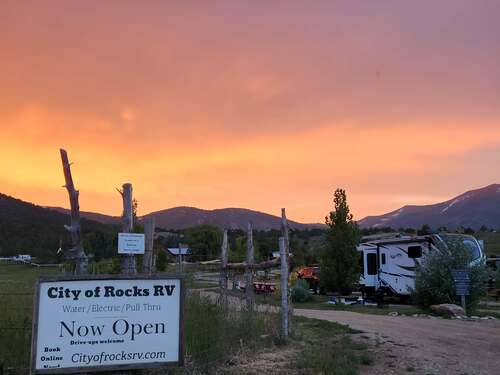
City of Rocks RV in Almo, Idaho, is the gateway campground at the entrance to the City of Rocks National Reserve in Cassia County — a partial-hookup (water and electric 20/30/50 amp) campground with big rig pull-through sites serving rock climbers, history enthusiasts, and high-desert nature explorers who make the pilgrimage to the City of Rocks' extraordinary collection of granite spires, domes, and pinnacles in the Albion Mountain range of southern Idaho. Almo's position at the base of the Silent City of Rocks gives City of Rocks RV the most convenient possible base for the reserve that outdoor recreation and history publications have consistently recognized as one of the most significant and most visually dramatic natural areas in the Pacific Northwest. Partial hookup sites with water and electric service at 20, 30, and 50 amps, big rig pull-through capacity, and Pioneer Bathrooms give guests the practical infrastructure for comfortable campground stays adjacent to one of the most unique geological landscapes in the American West. The campground's gateway position — literally at the entrance to the City of Rocks National Reserve — minimizes the drive between campsite and the reserve's trailheads, rock climbing routes, and historical sites. Pets are welcome. The City of Rocks National Reserve encompasses 14,407 acres of the Albion Mountains in Cassia County where 2.5-billion-year-old granite intrusions have eroded into the extraordinary collection of spires, domes, and balanced rocks that the California Trail's emigrant travelers named the "Silent City" in the 1840s — a landscape so otherworldly that the emigrants' diaries consistently described it in terms of architecture and urban analogy rather than conventional geological description. The reserve's 600 technical rock climbing routes, distributed across the granite formations from beginner slab climbs to expert crack and face routes, have made City of Rocks one of the premier rock climbing destinations in the western United States, with classic routes on formations like Elephant Rock, Morning Glory Spire, and The Parking Lot Wall drawing climbers specifically from across the Pacific Northwest and Intermountain West. The California Trail, one of the most heavily traveled overland emigrant routes of the 1840s-1860s, passed through the City of Rocks between 1843 and 1882 — and the granite formations of the Silent City preserves the original axle grease inscriptions that California-bound emigrants left on the smooth granite surfaces as informal guest registers documenting their passage westward. The National Park Service's interpretive program at the reserve interprets this trail heritage alongside the geological and biological character that make the City of Rocks a nationally significant landscape of multiple overlapping values. City of Rocks RV serves guests through the Cassia County outdoor recreation season from spring through fall, with the rock climbing season centered in the cooler months of May through June and September through October when the granite's surface temperature allows friction climbing that the July and August midday heat prevents. Twin Falls, 60 miles northwest, provides the full-service city's dining, lodging, and the Shoshone Falls — a Niagara-height waterfall on the Snake River sometimes called the Niagara of the West — that extends the day-trip range from the Almo base into the Snake River Plain's geological drama. Reserve sites ahead for the prime spring and fall rock climbing seasons, when the City of Rocks area's very limited commercial accommodation fills from the regional and national climbing community.
from $20/night
5.0
Aspen Grove Inn at Heise Bridge
30 RV Sites, 6 Cabins, 11 Tent Sites, 4 Cottages, 2 Yurts, 1 Onsite RV/Trailer, 1 House
Aspen Grove Inn at Heise Bridge in Rigby, Idaho, offers year-round accommodations in eastern Idaho's Snake River Plain — RV and camp sites, cabins, private cottages, yurts, glamper campers, and a lodge with bunkhouse giving guests a comprehensive range of lodging options in Jefferson County's agricultural and outdoor recreation landscape between Idaho Falls and the Teton Valley. The property's year-round operation and accommodation diversity serve the full spectrum of eastern Idaho visitors: fly fishing and float trip guests on the Henry's Fork and South Fork of the Snake River, Yellowstone National Park travelers using Idaho Falls as their western park approach, and the regional outdoor recreation community pursuing the Snake River Plain's volcanic geology and the surrounding public land network. RV sites with hookups, tent camping, cabins, cottages, yurts, glamper campers, and the lodge and bunkhouse give the property the most comprehensive accommodation range of any camping property in eastern Idaho — a flexibility that serves solo anglers, family groups, corporate retreat groups, and outdoor organizations whose equipment and accommodation needs span the full range that a property of this accommodation depth can address. The year-round operation maintains availability through the winter months when the surrounding Snake River Plain's fishing and wildlife activity continues in modified form from the summer peak. Pets are welcome. The Henry's Fork of the Snake River, flowing south from Henry's Lake through Island Park and the Mesa Falls corridor toward Ashton, is one of the most famous spring creek dry-fly fisheries in the world — the Railroad Ranch section through the Harriman State Park meadow, where rainbow trout of 18 to 24 inches rise in spring creek-style feeding lanes to mayfly and caddis hatches that the Henry's Fork's cold, clear spring flow sustains, is specifically cited in international fly fishing literature as a standard of difficult, technical, demanding trout fishing. The South Fork of the Snake River through the Swan Valley provides the float fishing complement — a large, productive freestone river where the rainbow and cutthroat trout populations support a guide industry of significant regional scale. Yellowstone National Park, approximately 90 miles north and east via the US Highway 20 and State Highway 47 Island Park corridor, gives Rigby the western approach to the park that avoids the congested South Entrance from Jackson Hole — a less-traveled approach through Island Park's volcanic caldera and the Ashton-Flagg Ranch Road into the park's Bechler and Falls River country in the park's southwestern quadrant. The Grand Teton National Park's western Snake River approach from Victor, Idaho, over the Teton Pass, provides the additional mountain scenery corridor accessible from the eastern Idaho base. Aspen Grove Inn at Heise Bridge operates year-round in eastern Idaho's continental climate, where the summer season from June through September provides the peak fly fishing, Yellowstone touring, and outdoor recreation activity and the winter months offer the specific cold-weather Idaho experience of the Snake River Plain landscape. The Ririe Reservoir, immediately west of Rigby, provides motorized water recreation, fishing, and the Tex Creek Wildlife Management Area's hunting access for the eastern Idaho visitor base. Reserve cabins, cottages, and lodge accommodations ahead for the peak summer fly fishing season when the Henry's Fork and South Fork guide bookings fill months in advance and overnight accommodation in Jefferson County fills from the regional fishing and Yellowstone travel market.
from $30/night
4.0
Ekstroms Stage Station
26 RV Sites, 3 Cabins, 4 Tent Sites
Where Rock Creek gathers itself before meeting the Clark Fork River at a confluence that every Montana fly fisherman knows by heart, Ekstrom's Stage Station has occupied its spot in Clinton, Montana, for long enough to feel genuinely woven into the landscape. Located just 20 minutes east of Missoula along I-90, the campground sits adjacent to Rock Creek—a stream carrying a Blue Ribbon trout designation from Montana Fish, Wildlife and Parks that brings dedicated anglers from across the country to work its riffles and pools. Two famous bighorn sheep herds are resident to the Rock Creek canyon, visible from the streamside corridor and adding a wildlife dimension that distinguishes the station from standard highway campgrounds. Accommodation options at Ekstrom's range well beyond the typical RV park offering: full hookup sites with 50/30/20-amp electrical service, tent and van camping spots, two rustic cabins, two tiny houses, and a historic hundred-year-old schoolhouse serve the range of travelers who find their way to this wooded tributary. Hot showers, free Wi-Fi, laundry facilities, and a dump station cover the practical infrastructure, while basketball and volleyball courts alongside a playground serve families with active children. The grounds occupy a large grassy field surrounded by tall pines, with sites level, quiet, and well-spaced for the kind of restorative stay that good fly fishing demands the night before. Rock Creek's Blue Ribbon designation reflects an exceptional trout fishery—clear, cold water over a cobble-and-gravel bottom supporting strong brown and rainbow trout populations that rise readily to dry flies on summer evenings. Fishing access begins effectively at the campground and extends for miles upstream into some of Montana's most productive wild trout water, with the Clark Fork confluence adding additional variety for those who want to swing streamers through bigger water. The on-site restaurant rounds out the experience—a dining option that campers consistently praise as a genuine highlight of staying at the station. Missoula, just 20 minutes west on I-90, provides full urban amenities in one of Montana's most culturally vibrant smaller cities—the University of Montana campus, an outdoor gear district on Higgins Avenue, a legendary farmers market, and a riverfront park system that makes the Clark Fork central to daily life downtown. The Rattlesnake Wilderness and National Recreation Area begins at the north end of Missoula and offers hiking and mountain biking through a surprisingly wild landscape minutes from the university. The Blackfoot River corridor, celebrated by Norman Maclean's novella A River Runs Through It, winds northeast from Clinton and provides additional floating and fishing opportunities that attract literary pilgrims and anglers from across the English-speaking world. The primary fishing season on Rock Creek runs from mid-spring through October, with classic summer dry-fly conditions peaking in late June and July when caddis and PMD hatches bring trout consistently to the surface during evening hours. Fall brings lower angling pressure, spectacular larch and cottonwood color in the creek corridor, and brown trout entering pre-spawn feeding mode that produces some of the year's largest fish. The campground operates through the warm season—contact the station directly to confirm current availability and any reservation requirements, particularly during peak summer fishing weeks when demand for Rock Creek access reliably outstrips available sites.
from $40/night